
Reflecting on Success: my mountain, your mountain

I’m currently on holiday in the beautiful north east of England, and it turns out I picked the perfect fortnight to be away from work. My life is now subsumed by time in the sea and time in front of the TV watching the Tokyo Olympics. I am fully committed to both activities, but one in particular is really giving me food for thought – this week, I’m reflecting on success.

Team GB are just marvellous, and I never fail to be amazed at their tenacity and determination to succeed in such a wide range of sports (recently I’ve been transfixed by the BMX racing and the trampolining, and those women in the Rugby 7s are phenomenal). Yesterday, Dan Walker on the BBC was interviewing the amazing Helen Glover, just after she and her partner had come fourth in the women’s coxless pairs final. Dan was asking Helen about her feelings on the subject of medals, given that she has previously won gold in the Olympics, and Helen said this:

‘What does success look like to you? Success looks different for different people’.

She was making the point that being an Olympian in the first place is a remarkable achievement, and sometimes it’s about the journey as much as it’s about the medals. We’ve all seen the headlines referring to Helen as ‘supermum’ and ‘mother of three’, but it’s worth remembering that every person arriving in Tokyo has had their own mountain to climb.

I love that – medals, medals, medals are the focus of all commentary at the Olympics, naturally, but I love hearing about the back stories and adventures of Olympians, whether they end with a medal or not. Apart from anything else, anyone who’s had to spend a year working at home has had periods of frustration and demotivation – imagine being a team player but not being able to work with your team while preparing for an Olympic games.

I’ve often spoken about the importance of understanding what success might look like to ourselves as individuals, rather than measuring success according to some (perceived) societal, professional or organisational norm. In midwifery, I remember part of the path that led me to undertaking a doctorate was my awareness that formal leadership and managerial roles might not be my personal measure of career success – at that point in my career, at least. It didn’t mean I respected midwives holding those roles any less, it just meant I understood my own strengths and weaknesses, and career preferences.

In my workshops and one-to-one coaching sessions, I encourage midwives to really think deeply about what success might look like to them. It may be that they aspire to a Head of Midwifery position, but equally they may want to be the best band 6 midwife they can be, or move into education or research. The point is, it really doesn’t matter: as Helen Glover says, success to you is going to look different from success using someone else’s perspective.

This week, success for me is getting into the sea every day (with wetsuit, obviously – I’m not mad!) and also continuing to learn about many sports I’ve never previously encountered. And anyone who knows me, knows there’s my devotion to Love Island to add into the mix as well. It’s going to be a busy week!

Leading Change: a succession of little things

Last weekend, I spent a very happy couple of hours at the Van Gogh immersive exhibition in York (which I highly recommend if you like a combination of deckchairs in a church, beautiful music, and all things Van Gogh). A number of quotes from Van Gogh were included during the exhibition, including this one:

‘The great does not happen through impulse alone, and is a succession of little things that are brought together’.

On further investigation, it transpires that Van Gogh wrote these words in 1882 as part of a letter to his brother, Theo. He was talking about an ‘invisible iron wall’ that seemed to stand between feeling and acting in the context of creating drawings, and how breaking through that wall was a process requiring patience and perseverance.

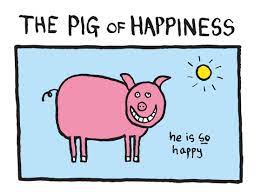
I found myself very much drawn to that phrase, ‘a succession of little things’. It reminded me of my old pal, the Pig of Happiness – anyone who’s heard me speak will know he’s one of my guiding lights.

Pig of Happiness

You can read more about my enduring love for the happy pig here, and I’m delighted that both he and Van Gogh are expressing the same idea: that for change to happen, we can’t expect to wave a magic wand and *ta-dah!*. Rather, we must be patient and keep persevering with our goal in mind.

I think anyone who has experienced or led organisational change can relate to this: it’s a long and winding road, and at times those invisible iron walls along the way, as suggested by Van Gogh, can seem insurmountable.

As Van Gogh goes on to say in the same letter,

‘And the great is not something accidental; it must be willed’.

Working with Insights Discovery has taught me so much about this idea of will in the context of leadership and change. Because we’re all complex beings, made up of many parts, ‘will’ is going to mean different things to different people. For some, it’s about driving change, leading from the front. For others, it might be about using charm and friendliness to persuade (maybe employing the old tea and cake methodology). For many of the healthcare professionals I’ve worked with, leading change is about understanding others’ perspectives and incorporating collaborative approaches. The point is, it’s always got to be up to us as individuals to understand what ‘will’ means to us, and then think about how our own inner Pig might approach change. And finally, work out what the succession of little things might be, in order to get over that progress-impeding wall.

If you’d like to know more about how Why Not can support you and your team in the context of change, get in touch. For now, pop along to watch the short cartoon about the Pig of Happiness and then consider your own approach to change. I challenge you to seek out some other Pigs and have a conversation about what ‘will’ looks like for each of you – you’ll definitely find that getting over the invisible wall can happen in a multitude of ways!

Knowing your Values: why it matters in leadership and in life

When I began this blog a couple of weeks ago to launch Why Not, I thought I would just be writing about all things midwifery leadership and identity. So how did I come to be writing a post about knowing your values?

I’ve realised that in reflecting on the process of setting up the business I’m also finding lots of links with the work I do around developing career and leadership thinking. So I’ve decided to blog about the path I’m on personally as well – establishing Why Not is quite the journey (oops, there’s that word – but actually, it’s entirely apt). I’ll be writing some of my posts to reflect on my experiences along the way, and to suggest how these reflections might also link to leadership more generally.

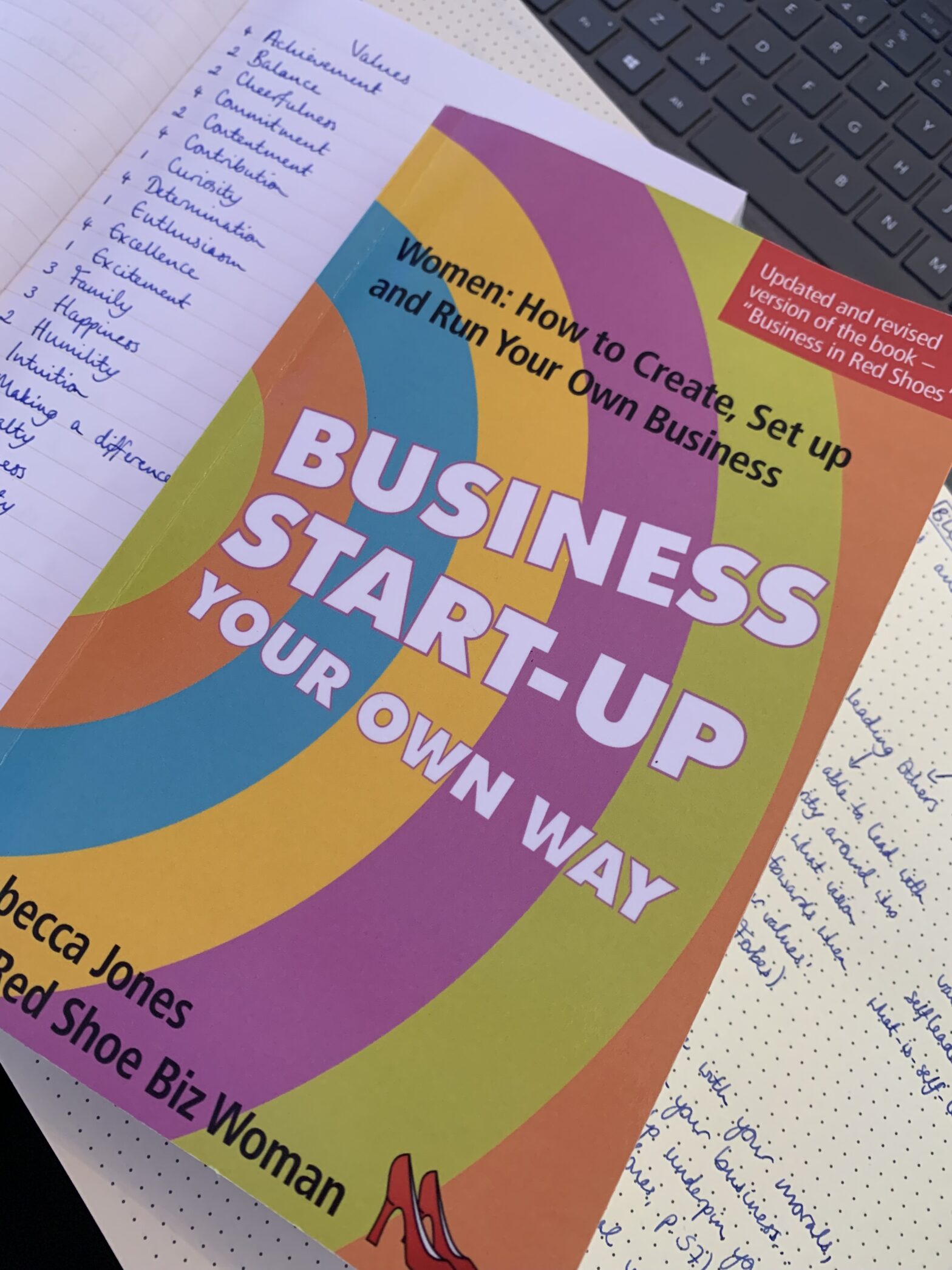
I’m a big fan of books (and podcasts, and videos, and websites…) that can offer guidance when I do something new and exciting, so I’ll be discussing some of these from time to time. This week, I wanted to mention Rebecca Jones‘s very clear and thought-provoking book, Business Start-up Your Own Way. In it, Rebecca guides the reader through the start-up process, beginning with the big questions about why you might want to run your own business. This week, I was doing some work on the chapter, Your Value System, and this stood out for me:

‘If you feel your business is in line with your morals, values and beliefs you will believe in your business… Ultimately, your value system will help underpin your mission statement and your purpose’.

The importance of knowing our personal values is discussed in the leadership context, too, in terms of both self-leadership and leading others:

In the context of self-leadership, values are linked to the central theme of self-awareness: ‘Self-awareness is about knowing your intentions and values’Andrew Bryant

And in leading others: ‘We are able to lead with greater clarity around who we are and what vision we’re working towards when we lead with our values’Carly Sime

So while I’ve discussed the importance and development of personal values in relation to leadership before, the idea of how my own values might impact the development of Why Not has been a new thought exercise.

The funny thing is, I actually found it quite tricky to write down my personal values, which is part one of the exercise. It turns out that even if you feel like you know what guides you, it can be a challenge to get this into words and phrases! Luckily, I found this page at Mindtools to help, and was able to identify particular words I might associate with my values. From there, I wrote down five key phrases, and these are a summary of my values:

Stay curious

Count your blessings

Value relationships

Do your best

Be kind

In doing that exercise, I realised that the values I identified are my guides in whichever bit of my life I’m thinking about. I could apply these values to my home life, to the work roles I’ve held in the past (whether in music, midwifery or academia), and to this latest adventure in business building. My next step is to condense and mould those phrases into my mission statement, and that’s a work in progress. For now, I’m playing with words and thinking a lot.

Now, over to you – are you able to articulate your personal values and make links between them and how you live and work? I’d recommend this as a really useful reflective exercise, particularly if you’re thinking about how you might behave as a leader (of self or others). And if you’re considering starting your own business, Rebecca Jones’s book is fab – her positive language is especially good for those times when you’re questioning whether it’s really possible to go it alone!

What is a midwife? The value of shared identity

Image by Andrea Piacquadio at Pexels

As I mentioned in last week’s blog, I presented at the (virtual) International Confederation of Midwives‘ Triennial Congress on June 30th. My subject was identity in midwifery (‘What is a Midwife?’), but the presentation took on a life of its own due to the immense amount of time that has passed since I submitted the original abstract – that was back in the early summer of 2019, and of course I’ve been doing a lot of work with midwives and other maternity care workers since then.

When I wrote the abstract, my subtitle was ‘Competing narratives of identity among clinical and managerial midwives’, and the presentation was due to discuss my doctoral research findings about how clinical and non-clinical midwives narrate the issue of identity quite differently at times, and how this can create tensions within the profession. Here’s an example of that discord in midwifery narratives:

‘I absolutely am a midwife through and through. I am a midwife who recognises her scope of practice, and I mean an enhanced scope of practice – my expertise is no longer the actual delivery of individualised clinical care. My expertise is in the macro-midwifery. And I think that’s one of the things we get hung up on, and why people say they don’t want to be heads of midwifery, because they’re not doing midwifery any more. And actually, they are’ (Susan, former head of midwifery)

‘I realise senior managers were once midwives, and I’m pretty sure originally they went into this for the same kind of reasons as myself, however ‘the needs of the service’ seem to have turned them into the kind of people who think it acceptable to give no thought whatsoever to midwives and staff as actual human beings instead of numbers to meet the needs of this service’ (clinical midwife)

Since I submitted the original abstract, I’ve been lucky enough to spend a couple of years exploring what we might do to build a bridge across those narratives, and how understanding midwifery as a profession that encompasses a range of clinical and non-clinical roles might support the development of a positive professional identity – and in turn, further understanding of the midwifery identity among relevant stakeholder groups. If we’re better able to understand the profession as a group singing from the same hymn sheet (and after all, I really do think we’re generally trying to achieve the same thing, wherever we sit), then other professional groups, Trust and Health Board managers, and of course women and their families, will also gain a new clarity and depth of awareness about the professional identity of midwifery, and how important it is.

So my presentation evolved into something more positive: the subtitle was now ‘Developing shared narratives of identity across the profession’, and I was able to highlight some of the work I’ve been doing to support personal, team and leadership development in midwifery. You’ll know by now that I’m using Insights Discovery as the framework to support the work I’m doing, and it felt good to be able to describe the positive reception that’s had so far. Most of all, it felt great to be moving beyond the findings from my research – after all, the reason I undertook the doctorate was because I wanted to find ways to enhance the midwifery professional identity.

When I completed the doctorate, a friend asked me what was the one thing I would like to do to move the research on. I said that I’d like to get midwives from every part of the profession around a big table, in order to explore and celebrate what we share, rather than what divides us. Why Not gives me the opportunity to do exactly that, and I’m excited to be part of the conversation around a very well-populated metaphorical table.